


Ocean Explorer — Reni & Iis
In a country, where 88 % of the population is Muslim, it has been rather rare for local Indonesian women to take part in the surfing community – even to this day. We’ve met with...



The textile industry is one of the most environmentally damaging sectors. So, as a company that operates in this sector, we see it as our duty to make sustainability an issue and to help spread awareness. The environmental impact of a textile arises along its entire life cycle: from raw material extraction and fi ber production to further processing, trade, use, and disposal. Let’s not forget about transport and packaging, either. Every year, the global textile industry is responsible for emitting 1.2 billion tons of greenhouse gases into the atmosphere. And this only concerns the production of textiles and excludes the supply chain aspects like transportation, retail, and waste management! All together, it adds up to 4.5 billion to 6.5 billion tons of CO2-equivalent greenhouse gases per year. In addition, up to one kilo of chemicals is needed to produce one kilo of textile. Many of these substances are diffi cult to break down and end up in wastewater and ultimately in the sea.
So, let’s have a chat about one material that is almost omnipresent in our lives: nylon. Nylon can be found everywhere these days: in your raincoat, your tent, your car’s seatbelts, your shirt. It has its roots in WWII, emerging from the desire to find alternatives 14 to silk for parachutes during the war. On top of that, there was a shortage of traditional dress fabrics like silk and cotton after the war, so nylon quickly gained popularity as a fabric for women’s garments and later other clothing, carpets and many more things. It became the fi rst fully synthetic material ever made. Since its creation in the 1930s, the amount of nylon used each year has been continuously increasing. However, nylon has a negative impact on the environment and is not a sustainable fabric choice. Its production releases nitrous oxide, a potent greenhouse gas, and relies on crude oil, depleting fi nite resources and contributing to global warming. Unlike natural fabrics, nylon is non-biodegradable, adding to landfi ll waste, while discarded items like fi shing nets and bags often end up polluting our oceans.
A promising alternative to virgin nylon is Econyl®, a regenerated nylon made entirely from waste instead of crude oil. It’s produced from materials like old carpets, fi shing nets, discarded clothing, and “pre-consumer waste” – plastic byproducts from industrial processes. It is not only made from waste, but can also be endlessly recycled. This material truly represents the future of sustainable fashion and shows a wonderful example of how the fashion industry can embrace a circular economy.
Econyl® was created by the Italian company Aquafil. After years of research and significant impact into development, Aquafi l completed the transformation of Nylon 6 waste into regenerated nylon in 2011, launching its fl agship project: Econyl®. They have been recycling nylon since the 1990s, and in 2007, they began creating a closed loop for nylon, meaning that it is not only recyclable, but also that it is already made from recycled materials. They are pioneers of the circular economy revolution in the textile sector, both in Italy and around the globe. Econyl® shows the same high quality, durability, stretch and testing standards as conventional nylon. However, due to its recyclability and the fact that it does not rely on oil for production, it is much more sustainable. All these factors contributed to Econyl® becoming more and more popular and dominant, as the fashion industry looks to become more sustainable. Over the last couple of years, many sustainable fashion brands have started to use Econyl®, most of which produce swimwear and activewear lines, just like us.

Discover our Sustainable Swimwear →

To ensure that we at Oy can make a diff erence, we started looking into more environmentally friendly materials and production relatively early on in our journey. In 2018 we launched our first collection made with recycled fabrics. Today, all of our products are made out of recycled fabrics, the main materials being recycled Polyamide (PA) or – in the case of our accessories – organic cotton.
By processing Econyl®, we avoid using new nylon and therefore conserve crude oil resources. Technically, Econyl® enables circular production, as the yarn can be recycled over and over again. This way, our products are not wasted after they reach their end of life.
To ensure elasticity and functionality in swimwear and sportswear, nylon needs to be blended with elastane. At this point, this blended fabric cannot be recycled, at least not for industrial purposes. We know, however, that a lot of work is being done in this area to change that, as there is great potential to recycle this material.

In addition to using recycled materials for our surf and yoga wear, we are committed to sustainability in all our production steps and actions.

It has always been important to us not only to produce sustainably but also to use our platform to educate. To show what‘s possible. But also to talk about the difficulties we face every day. To demonstrate that even with all these diffi culties, it is possible to contribute to a more sustainable fashion industry, which ultimately leads to more sustainable consumption. We therefore see it as our responsibility to use our platform to share our knowledge. After all, only knowledge and education will enable us to make a diff erence!

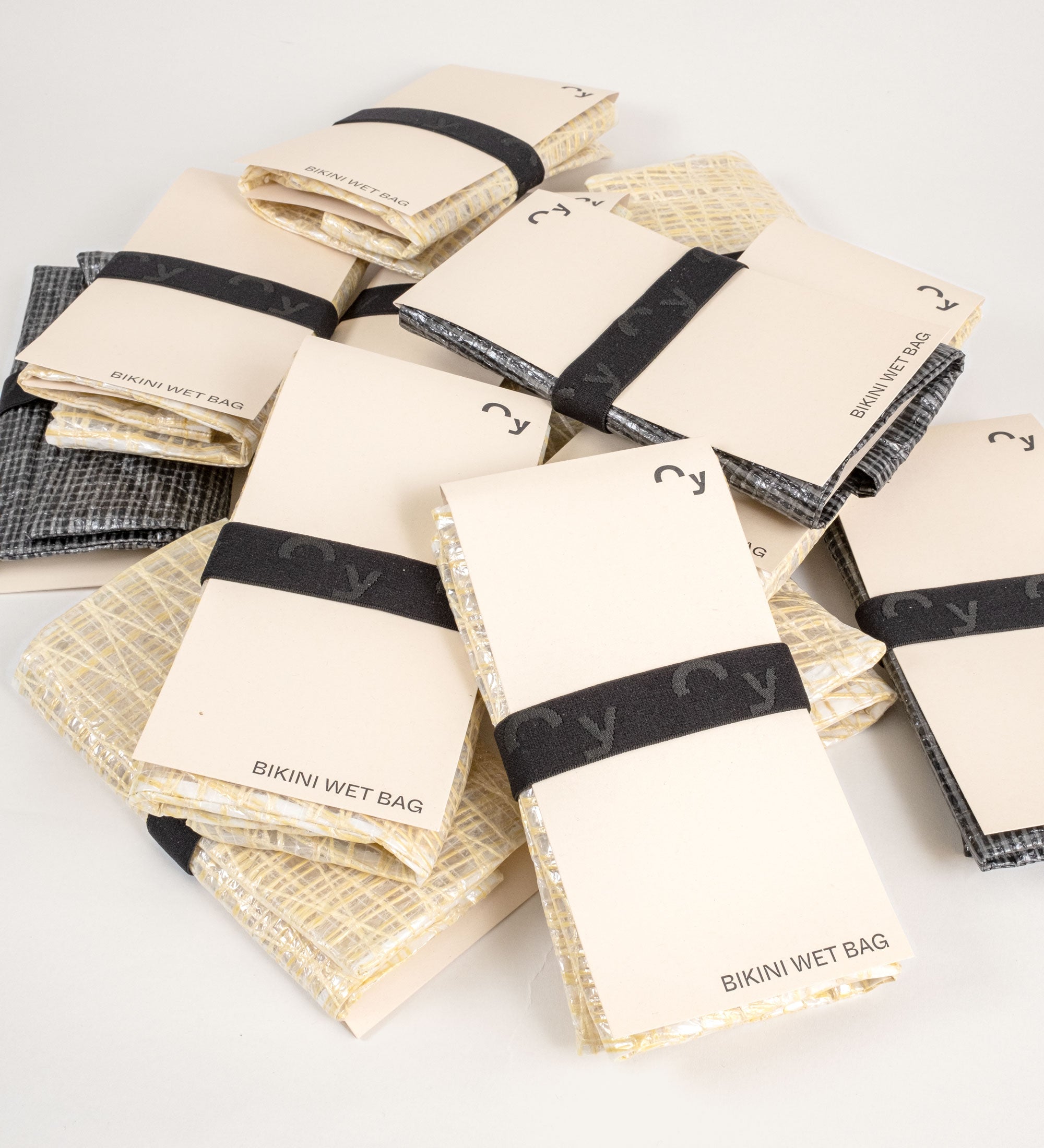
It is important to us that the materials in which our products are packaged and shipped are also sustainable:

In 2018, we decided to move our production site from Indonesia to Europe to get rid of unnecessary circles of transportation, since all our materials and fabrics are sourced in Europe. Our products are now manufactured in Portugal by a small family business and under fair working conditions.
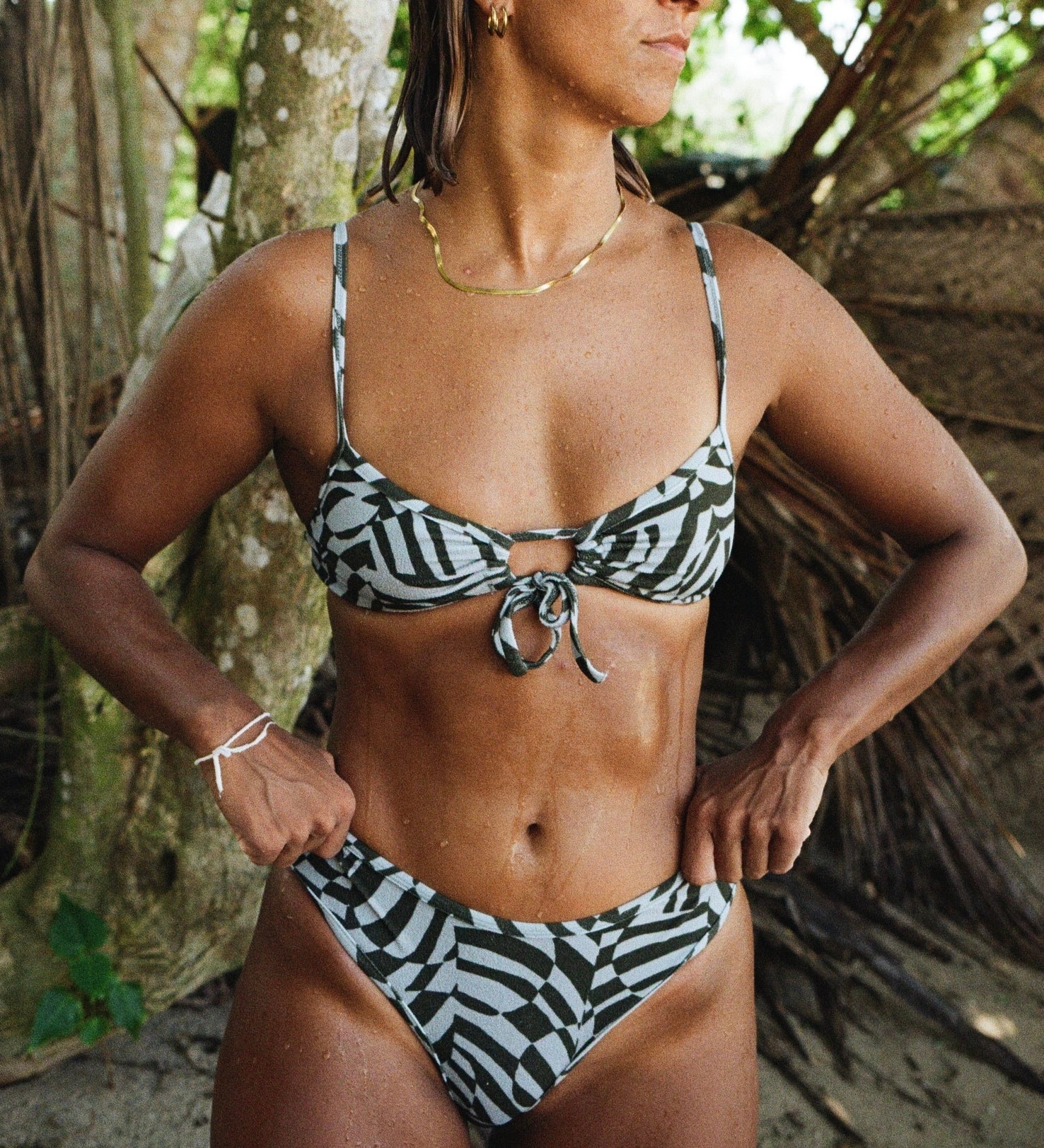
Signatures — Bikinis and Swimsuits for surfing, functional yet design driven.
Aesthetics — Perfect for endless days at the beach or at the lake without or with only relaxed sports activity.

